Side Project
NavEire
Side project about trust states and return loops in a real-time commuter app.
Role
Solo Designer · AI-assisted build
Status
Live
Tools
Figma, Git, React, Node.js, SQLite
Bridge note
The core design problem here is the same one that breaks live-service game features: when a system looks unreliable, people stop trusting it entirely. NavEire treats stale data and feed disagreements as a design problem rather than a technical footnote. That instinct comes from live-event work, where honest feedback about progress and rewards is what keeps people coming back.
Context
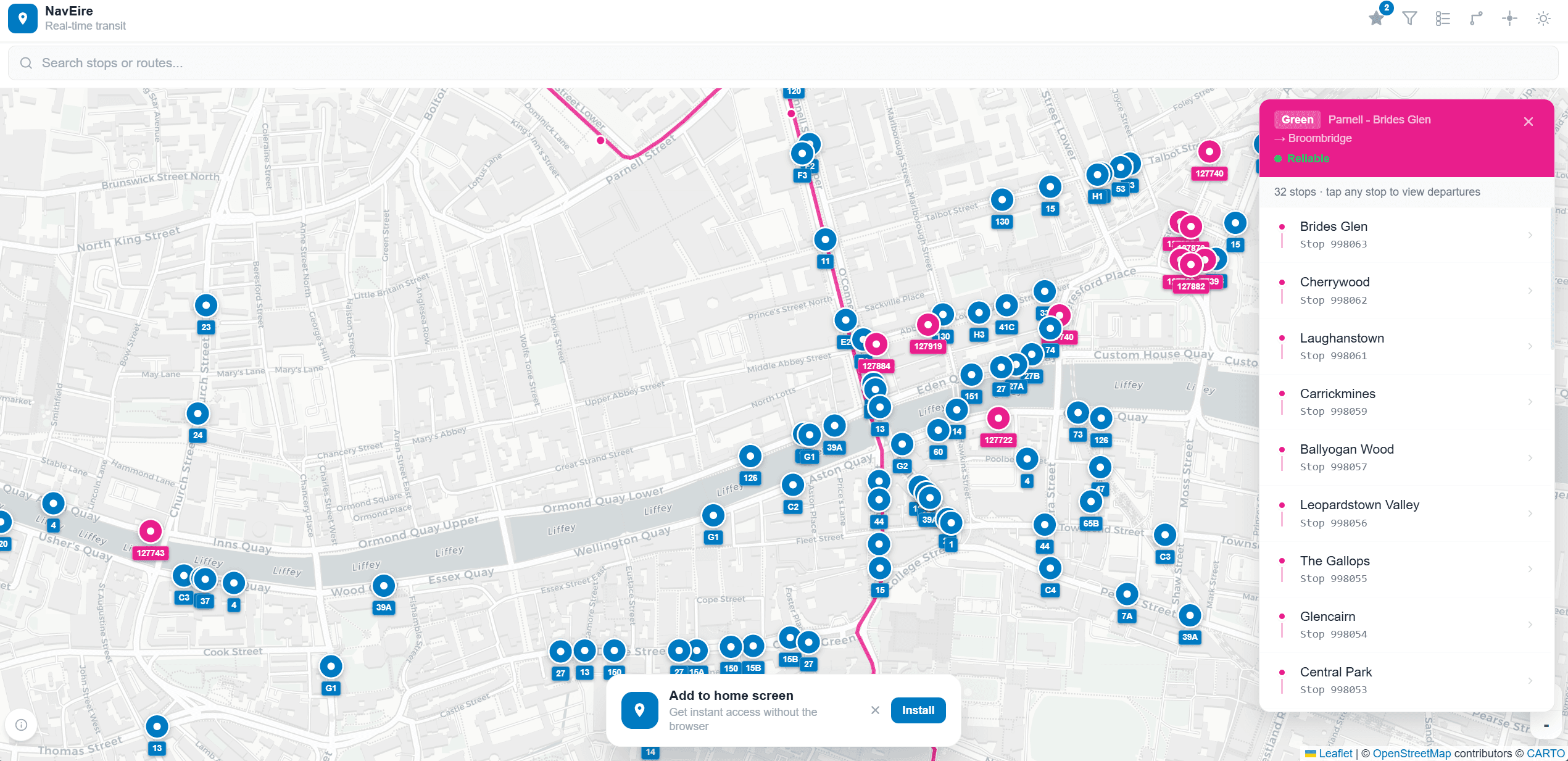
- NavEire is a real-time public transport app for Ireland. I started it because checking a bus felt slower than it needed to be. I designed it around fast, low-friction journey checks using live government feeds, with clear states for when that data cannot be trusted.
- I designed the screens and flows in Figma and directed the implementation prompt by prompt. The code was AI-generated, which is why I treat this as design authorship rather than engineering authorship.
Problem
- Irish transit data exists, but the rider tools built on it felt slow and fragmented to me as a commuter.
- There was no strong map-first view of live vehicles and departures.
- Checking the same few stops each day took more steps than it should.
Constraints
- Designed solo, with the implementation generated by AI under my prompt-by-prompt direction.
- Had to stay inexpensive to run as a solo project.
- Public data feeds did not always agree with each other on the same stops.
Design decisions
- Caching, freshness labels and fallback states were treated as part of the user experience, not hidden technical details.
- Where feeds disagree, the interface says so rather than silently picking one.
Outcome
- Live progressive web app at naveire.ie.
- Designed the home screen to surface saved stops and buses so repeat checks are quicker. First-time users get an empty state with guidance instead of a blank screen.
- Clear stale-data labels and fallbacks keep the app readable when live feeds lag.
- I designed the screens in Figma and directed the build prompt by prompt. The code itself was AI-generated.
- Tested informally, in real use, by me and a few friends. There has been no structured usability study, and the time saving is a design intention rather than a measured result.
What this shows
- NavEire is live and is the clearest example of me designing for trust and repeat use outside a game.
- Testing so far has been informal: my own daily use and a few friends using it in real conditions. A structured task-based study is the obvious next step, and until it happens I describe the faster repeat check as an intention, not a proven outcome.