Project Case Study
Beat Viper
Rhythm-survival mobile game blending snake mechanics with music
Role
Solo Designer & Developer
Status
In Development
Tools
Unity, C#
Tags

Case Study Snapshot
Problem
Casual mobile games often rely on reflexes alone. Beat Viper aims to layer musical timing on top of spatial reasoning, creating a more satisfying loop where skill is measured by rhythm as well as reaction.
Constraints
- Solo project built in available time alongside other commitments.
- The rhythm system has to feel tight — any perceptible input lag breaks the experience on mobile.
- Progression has to stay fair: difficulty should come from tempo, not from punishing controls.
Results
- Designed and prototyped the core rhythm-snake loop in Unity.
- Built custom beat-detection and input timing systems to align gameplay with audio.
- Actively iterating on feel, difficulty curve, and visual polish.
Overview
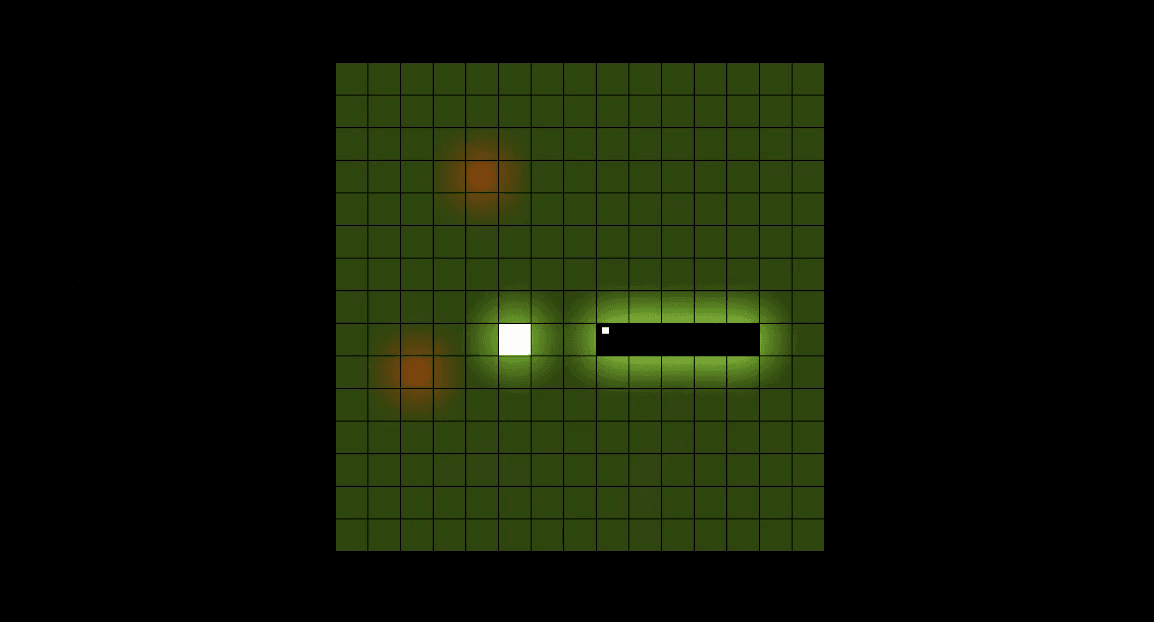
Beat Viper is a casual mobile game built around a single hybrid mechanic: snake movement driven by rhythm. The player controls a growing trail on a grid, but movement syncs to the beat of the soundtrack. Miss the rhythm, mistime a turn, and the run ends.
The core loop is designed to be instantly readable but progressively demanding. Early levels let players find the groove at low tempo. Later levels push the BPM until precise timing is the only thing keeping the run alive.
Challenges
The central challenge is latency. Rhythm games live or die on input feel, and mobile audio pipelines introduce variable delay between the beat and what the player hears. Building a custom timing layer that compensates for device-specific audio latency was the first major technical problem to solve.
Balancing difficulty through tempo rather than control complexity is a design constraint that shapes every decision. The game has to feel fair at any speed — the only thing that should change is how fast the player needs to think.
Process
Development started with a stripped-back prototype: a snake that moved one cell per beat, nothing else. Getting that core feel right — the snap of movement aligning with audio — took longer than expected, and most of the early iteration was just tuning that single interaction.
From there, the work has been layering on top of a solid foundation: obstacle timing, tempo escalation, visual feedback, and progression structure. Each feature gets prototyped and playtested before the next one starts.
Where It Stands
Beat Viper is in active development. The core loop is prototyped and the rhythm system works. Current focus is on polishing the feel, building out a level structure, and getting it in front of players for feedback.
It is also a useful creative counterweight to the product work. Building something purely for fun, with no business model attached, keeps the design instincts sharp.
External Links
Links will be added as the project evolves.